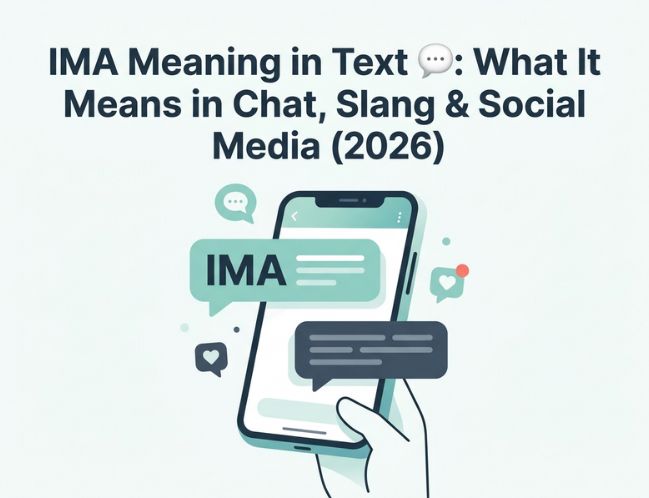

You spot “ima” in a chat and wonder if it is a typo. It is not. The IMA meaning is simple: “ima” is slang for “I’m gonna,” which is short for “I am going to.”
This guide covers the IMA meaning on every major app, where the word came from, how to spell it, and replies you can copy.
Key Takeaways
- The core IMA meaning is “I’m going to” or “I’m about to.”
- It is not a typo. It is a written form of “I’m gonna.”
- Ima, imma, and I’ma all mean the same thing.
- The word has roots in AAVE and hip-hop.
- Use it with friends and on social media. Skip it in formal or work messages.
- In Hebrew “ima” means “mom,” and in Japanese it means “now.”
What Does “Ima” Mean in Text? (Quick Answer)
“Ima” means “I’m going to” or “I’m about to.” The IMA meaning in text is a plan or action the sender will take soon. It is a casual spelling of how “I’m gonna” sounds in fast speech.
Simple Examples You Can Copy
- “Ima call you after class.”
- “Ima grab food. Want anything?”
- “Ima be late, save me a seat.”
- “Ima be honest, I loved it.”
The Short Version
- Full form: I am going to
- Spoken form: I’m gonna
- Text form: ima
- Tone: casual and friendly
That is the whole IMA meaning at a glance.
Is “Ima” Just a Typo?
No. It is a deliberate spelling of how people talk. The only real mix-up is with “I’m a,” as in “ima nurse.”
Check the word that follows. A verb like “go” or “try” points to the slang. A noun like “teacher” points to “I’m a.” So the IMA meaning depends on context.
Where Did “Ima” Come From?
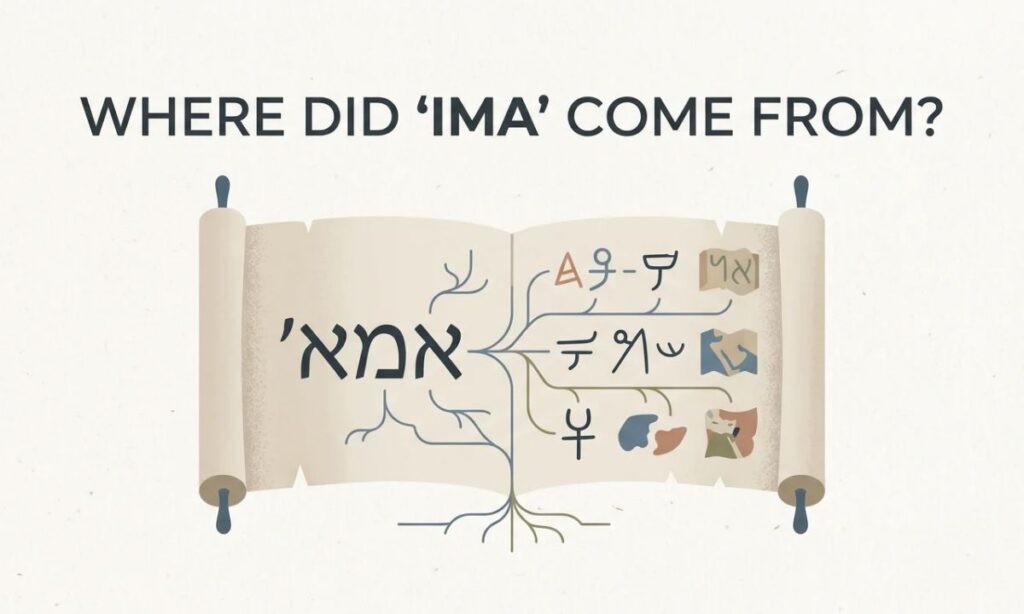
People said “ima” long before they typed it. Sociolinguist William Labov noted “I’ma” in research on African American English in the late 1960s. It reached print through rap lyrics, and smartphones did the rest.
How “I’m Gonna” Turned Into “Ima”
Speech shortens itself over time:
- I am going to
- I’m going to
- I’m gonna
- Imma or ima
Fast talking blends the sounds and drops the middle. The IMA meaning follows the sound, not the spelling.
The AAVE and Hip-Hop Influence
The form is closely tied to African American Vernacular English, though some Southern speakers use it too. Hip-hop carried it into the mainstream, from N.W.A.’s 1988 lyrics to Kanye West’s famous 2009 “Imma let you finish” moment. Social media then made it global.
Ima vs. Imma vs. I’ma: Which One Is Right?
All three mean the same thing. None of them is formal English, so no spelling is officially correct. Dictionaries and writers still disagree on the best form.
Which Spelling Should You Use?
- Ima: fastest to type, common in DMs
- Imma: closest to the spoken sound
- I’ma: shows the contraction clearly
Pick one and stay consistent. The IMA meaning does not change with spelling.
Common “Ima” Phrases (Ima Go, Ima Try, Ima Head Out)
| Phrase | Plain English |
|---|---|
| Ima go | I’m going to go |
| Ima try | I’m going to give it a shot |
| Ima head out | I’m about to leave |
| Ima let you know | I’ll tell you later |
| Ima be honest | I’m going to be truthful |
| Ima need a minute | I’ll need a moment |
How People Actually Use “Ima” in Real Chats
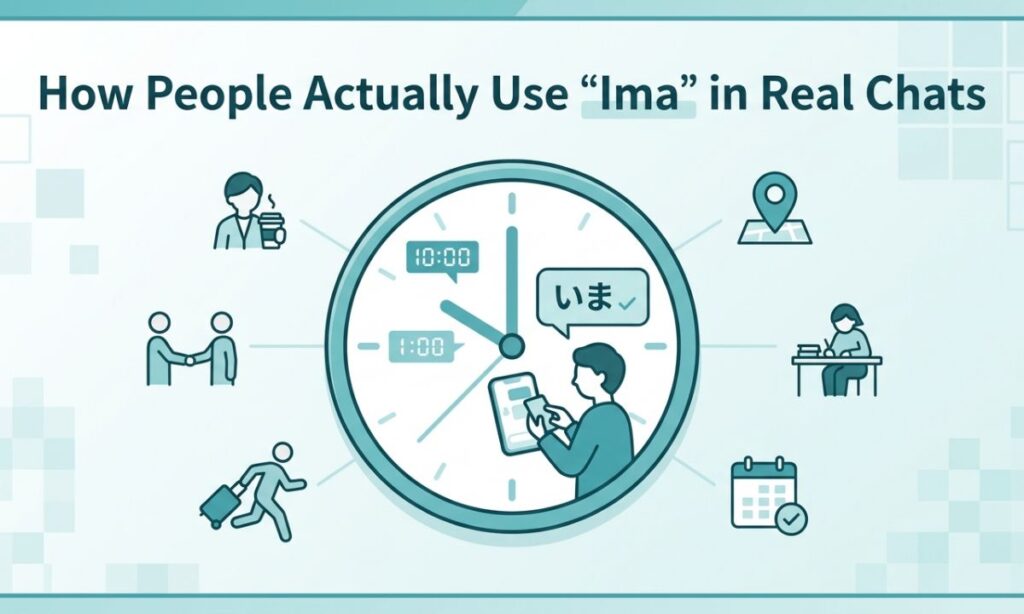
The apps change, but the idea stays the same: someone is about to act.
On WhatsApp
Plans and quick updates fit well here. Example: “Ima call you after work.”
In Instagram DMs
People use it when replying to stories or sharing links. Example: “Ima send you the link.”
In TikTok Comments
It shows up in jokes and reactions. Example: “Ima try this recipe today.”
In Regular Text Messages
It works for status updates. Example: “Ima be there in ten.”
What Does “Ima” Say About the Person Using It?
The word carries a mood as well as a plan.
It Keeps the Tone Relaxed
“Ima” sounds like speech, so the message feels easy and unforced.
It Signals “I’m About to Do This”
It suggests action is close. It sounds firmer than “maybe I will.”
It Makes a Message Feel Friendlier
The casual spelling shortens the distance between two people.
When Is It Okay to Use “Ima”?
On Social Media
Comments, captions, and DMs welcome it. Most followers read it without a second thought.
With Friends and Partners
This is where it fits best. It sounds natural and warm.
At Work or in Professional Messages
Skip it with clients and managers. Write “I’m going to” or “I will” instead. At work, the IMA meaning may not land with everyone.
Casual vs. Serious Conversations
Keep it out of apologies, bad news, and formal requests. Serious topics need plain, complete sentences.
What Does “Ima” Mean When Someone Texts It to You?
Whoever sends it, the IMA meaning is a heads-up about their next move.
From a Girl or a Guy
The meaning is the same. Only the tone changes, and that depends on your relationship with the sender.
On Snapchat
It usually signals a quick status, like “Ima send a snap later.”
On Urban Dictionary
Entries there are user-written. Most say “I’m going to,” and a few are jokes. Treat it as a guide, not an official source.
Does “Ima” Ever Mean Something Else?
Yes. Outside slang, the IMA meaning shifts fast.
“Ima” in Hebrew (Does It Mean Mom?)
Yes. In Hebrew, “ima” (אמא) means “mom.”
“Ima” in Japanese
In Japanese, “ima” (今) means “now.”
“Ima” in Filipino
Tagalog has no common standalone word “ima.” In Taglish chats it is usually the same English slang. It can also be a nickname.
IMA in Business
It can stand for Investment Management Agreement or Institute of Management Accountants.
IMA in Medicine
Doctors may use it for the inferior mesenteric artery or the internal mammary artery.
Is “Ima” the Same as “IMAO”?
No. IMAO is a separate abbreviation, often read as “in my arrogant opinion,” a playful cousin of IMHO. “Ima” announces an action, while IMAO shares a view.
Common Mistakes People Make With “Ima”
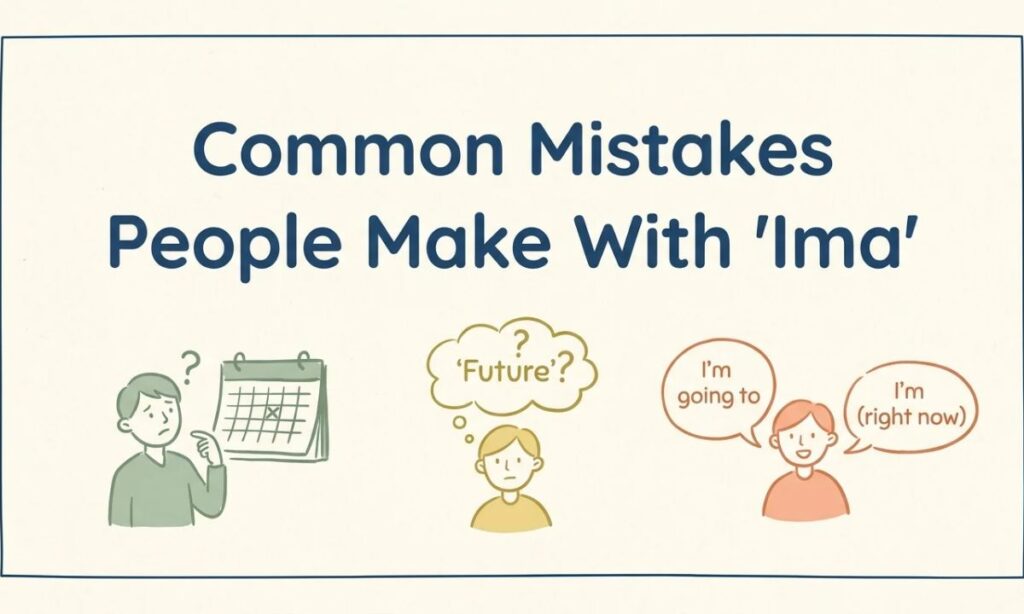
Thinking It’s a Typing Error
It is intentional. Do not “correct” it in someone else’s message.
Assuming Everyone Uses It the Same Way
Age, region, and online community shape how people use it.
Using It Where It Doesn’t Fit
Formal emails, cover letters, and school essays need full phrases.
Believing It Has Only One Meaning
Hebrew, Japanese, and industry uses prove otherwise.
Ima vs. Similar Slang at a Glance (Comparison Table)
| Term | Meaning | Vibe |
|---|---|---|
| Ima / Imma | I’m going to | Casual, friendly |
| Gonna | Going to | Casual, spoken |
| Finna | Fixing to, about to | Regional, informal |
| Tryna | Trying to | Casual, chatty |
| IMO | In my opinion | Neutral, common online |
The Key Takeaway
“Ima” is about action, not opinion. The IMA meaning is a near-future plan, which sets it apart from IMO or IMAO.
How Do You Reply When Someone Says “Ima”?
Casual Replies
- “Sounds good.”
- “Cool, text me after.”
Funny Replies
- “Ima need details.”
- “Ima hold you to that.”
Confident Replies
- “Do it.”
- “Let’s go.”
Polite, Low-Key Replies
- “Okay, thanks for the update.”
- “No problem, take your time.”
How “Ima” Is Understood Around the World
In Western Countries
People in the US, UK, Canada, and Australia widely know it, especially younger users.
In Asian Countries
English learners online pick it up quickly. Japanese readers may first think of “now” (今).
In the Middle East
Hebrew speakers may think “mom” at first. Chats that mix in English slang usually clear it up.
Across the Global Internet
Context settles the question. A verb after “ima” almost always means “I’m going to.”
Frequently Asked Questions About “Ima”
1. What does “ima” mean in texting?
The IMA meaning in texting is “I’m going to” or “I’m about to.” It is a casual, phonetic spelling of “I’m gonna.”
2. What does IMA stand for?
In slang, it stands for “I’m gonna.” In business or medicine, it can be an industry acronym.
3. Why do people say “ima”?
It is quick to type and matches how people actually speak.
4. Does “ima” mean “now”?
Not in English slang. In Japanese, “ima” does mean “now.”
5. What’s the slang for “I am”?
“I’m” is the standard contraction. “Ima” is the slang for “I am going to.”
6. Is “ima” proper English?
No. It is informal slang and does not belong in formal writing.
7. What’s the difference between “ima” and “imma”?
Nothing in meaning. They are two spellings of the same word.
8. Is “ima” popular on TikTok?
Yes. It appears often in comments, captions, and reactions.
9. Can adults use “ima”?
Yes. It works fine in casual chats with friends, family, and partners.
10. Should I use “ima” at work?
Avoid it in formal messages. It may be fine in relaxed team chats, if your workplace culture allows.
11. Is “ima” rude?
No. It is only too casual for formal or serious situations.
Final Thoughts: Should You Use “Ima”?
Yes, in casual chats. It is quick, friendly, and widely understood. Once you know the IMA meaning, you can read it and use it with confidence.
Just match your audience. Use “ima” with friends and on social media, and switch to full phrases at work or in serious talks.