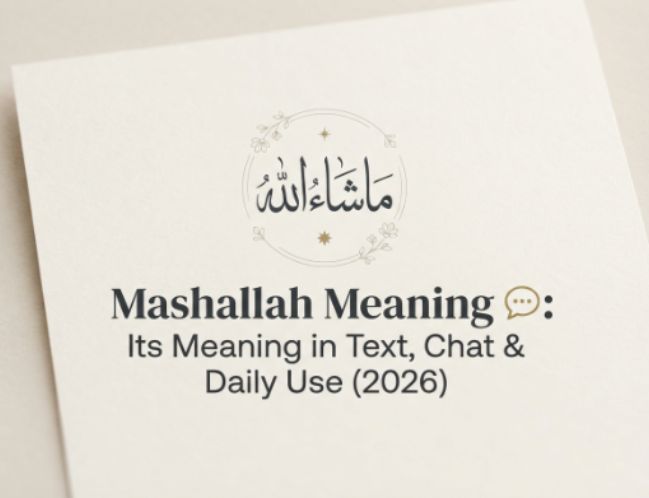

Quick Answer: “Mashallah” (Arabic: ما شاء الله) means “What God has willed,” said to express admiration, gratitude, or praise for something good, while acknowledging it happened by God’s will. It’s also commonly said to protect against the evil eye when complimenting someone.
What Does Mashallah Mean?
The Mashallah meaning centers on gratitude and humility. When someone sees something good, a healthy baby, a beautiful home, good news, or an impressive achievement, they say Mashallah to recognize that the blessing came from God rather than from luck or human effort alone. It’s part compliment, part prayer, and part protection, all wrapped into one short phrase.
Understanding the Mashallah meaning helps explain why you’ll hear it constantly in Muslim households, on social media captions, and in everyday conversation across many cultures, not just in religious settings.
What Does Mashallah Literally Translate To?
The literal Mashallah meaning breaks down into three Arabic parts: ma (what), sha’a (has willed), and Allah (God). Put together, it translates literally to “what God has willed” or “God has willed it.” The phrase is grammatically complete on its own and refers to something that has already happened, not something hoped for in the future.
Why Do Muslims Say Mashallah?
The Mashallah meaning explains why Muslims say it so often: Islamic teaching encourages believers to credit good things to God rather than to chance or personal achievement alone.
It’s a small act of humility said in the moment something positive is noticed. Saying it also reflects a long-standing belief, held across many Muslim-majority cultures, that unspoken admiration or silent envy can bring bad luck to the person or thing being admired, sometimes referred to as the evil eye.
When Do People Say Mashallah?
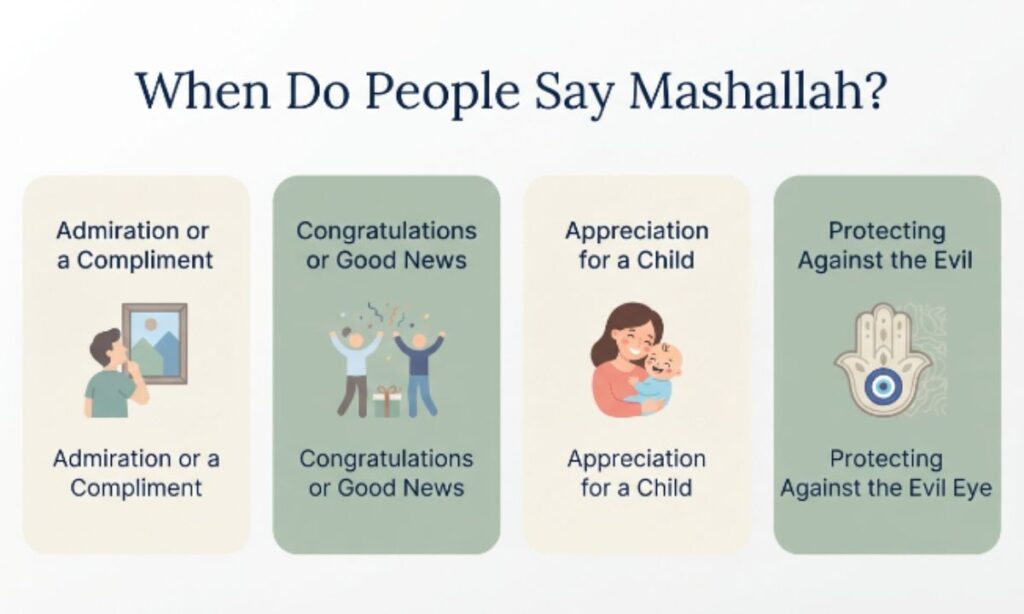
Admiration or a Compliment
The Mashallah meaning often shows up alongside a compliment, such as praising someone’s new car, outfit, or home. It softens the compliment by acknowledging a higher source behind the good fortune.
Congratulations or Good News
When someone shares good news, a new job, an engagement, exam results, Mashallah is a natural response that celebrates the news while giving thanks.
Appreciation for a Child
One of the most common uses is when admiring a baby or young child. Parents and relatives often expect a “Mashallah” alongside any compliment about a child’s looks, health, or intelligence.
Protecting Against the Evil Eye
Many people say Mashallah specifically to guard against the evil eye, the belief that envy, even unintentional, can cause harm. Adding Mashallah to a compliment is thought to neutralize that risk.
Mashallah in Different Languages
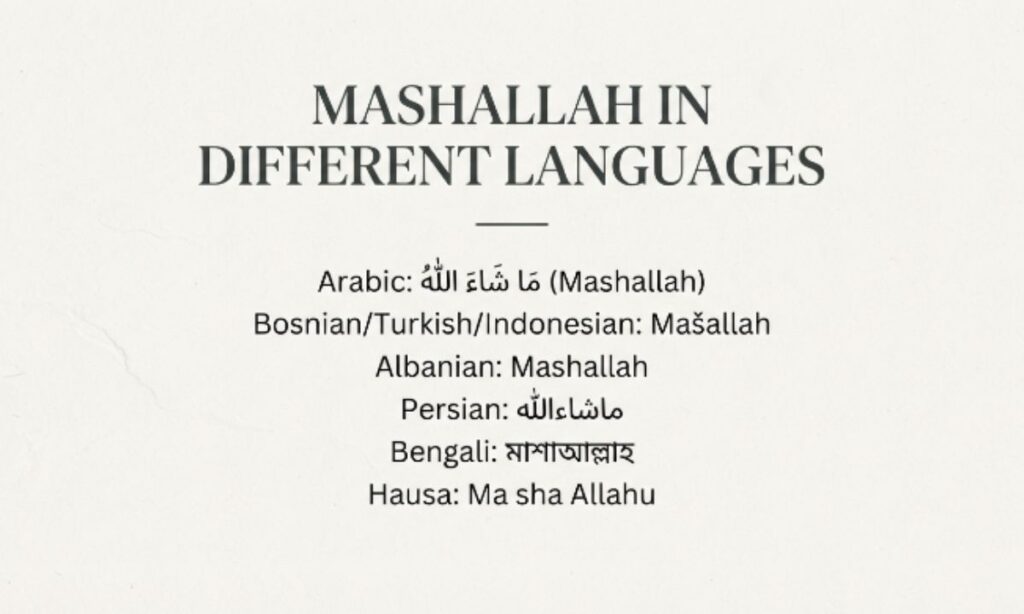
The Mashallah meaning doesn’t change across languages, only the surrounding vocabulary does.
Meaning in Urdu
In Urdu, Mashallah carries the same meaning and is used identically, as an expression of praise and protection, especially common among South Asian Muslim families.
Meaning in Hindi
In Hindi-speaking communities, particularly among Muslims in India, Mashallah is used the same way, borrowed directly from Arabic with no change in meaning.
Meaning in Bengali, Tamil & Telugu
Across Bengali, Tamil, and Telugu-speaking Muslim communities, Mashallah retains its original Arabic meaning and is commonly woven into everyday speech and compliments.
Meaning in Turkish
In Turkish, Mashallah is used the same way, often alongside local evil-eye symbols like the Nazar, reflecting how deeply the phrase and the belief behind it are intertwined across cultures.
Mashallah vs Inshallah: What’s the Difference?
Comparing the Mashallah meaning with Inshallah is one of the most common points of confusion:
| Phrase | Meaning | When It’s Used |
|---|---|---|
| Mashallah | “What God has willed” | For something good that has already happened |
| Inshallah | “If God wills” | For something hoped for in the future |
The key difference is timing. Mashallah looks back at something good that already occurred, while Inshallah looks ahead to something someone hopes will happen.
Mashallah vs Alhamdulillah: Which Should You Say?
Since both phrases express thanks, people often ask how the Mashallah meaning differs from Alhamdulillah in daily use:
| Phrase | Meaning | Typical Use |
|---|---|---|
| Mashallah | “What God has willed” | Praising something good, especially when complimenting someone or something |
| Alhamdulillah | “Praise be to God” | Expressing gratitude for personal blessings or good outcomes |
Both phrases express thanks, but Mashallah usually appears when admiring or complimenting something, while Alhamdulillah is used more broadly to express personal gratitude, such as after recovering from illness or receiving good news about yourself.
What Does “Mashallah Tabarakallah” Mean?
“Mashallah Tabarakallah” combines two phrases: Mashallah, carrying the core Mashallah meaning of “what God has willed,” and Tabarakallah (“blessed is God”). Together, they intensify the praise, acknowledging both that something happened by God’s will and that God himself is blessed and worthy of praise for it.
What Does “Allahumma Barik” Mean, and How Is It Related?
“Allahumma Barik” means “O Allah, bless it.” It’s closely related to the Mashallah meaning because both phrases are used to protect against the evil eye. While Mashallah acknowledges that something good happened by God’s will, Allahumma Barik is a direct prayer asking God to bless and protect that specific person or thing.
Saying Mashallah to Ward Off the Evil Eye
At its core, the protective side of the Mashallah meaning comes from a belief that predates Islam but remains deeply woven into many Muslim cultures. The idea is simple: admiration, even well-intentioned, can carry an element of envy that causes harm to the person or thing being admired.
Saying Mashallah interrupts that risk by immediately crediting the blessing to God instead of leaving the compliment “unprotected.” This is why you’ll often hear people gently remind each other to “say Mashallah” right after a compliment, especially around children, new possessions, or good news.
Mashallah in Everyday Conversation
Away from formal religious settings, the Mashallah meaning still holds even in the most casual exchanges.
Among Friends
Friends often use Mashallah casually, reacting to good news, achievements, or even a great outfit, sometimes without much religious weight attached.
With Family
Within families, the Mashallah meaning is applied more consistently and sometimes expected, particularly from elders when admiring children or milestones like weddings and graduations.
On Social Media
On platforms like Instagram and TikTok, Mashallah frequently appears in captions and comments celebrating achievements, family photos, or happy moments, often alongside emojis like 🤲 or ✨.
Is Mashallah Only Used by Muslims?
No. While the Mashallah meaning is rooted in Islamic tradition, it’s commonly used by non-Muslims in regions with large Muslim populations, including parts of the Middle East, South Asia, and North Africa. In these areas, the phrase has become part of shared cultural vocabulary, even among people of other faiths.
Is Mashallah a Compliment?
Yes, in practice, the Mashallah meaning usually functions as a compliment, but one with a spiritual layer attached. Rather than praising a person or object directly, it redirects the praise toward God while still expressing genuine admiration.
How to Respond When Someone Says Mashallah to You
Because the Mashallah meaning carries gratitude, there’s no strict requirement to respond in a specific way, but common replies include a simple “Jazakallah khair” (thank you, may God reward you) or “Alhamdulillah” (praise be to God), both of which continue the spirit of gratitude the original phrase carries.
Common Mistakes About Using Mashallah
People misunderstand the Mashallah meaning in a few recurring ways:
- Confusing it with Inshallah. Mashallah refers to the past or present; Inshallah refers to the future.
- Treating it as purely decorative. For many people, it carries genuine religious and protective meaning, not just habit.
- Assuming it’s only for religious occasions. It’s used constantly in casual, everyday conversation.
- Overusing it insincerely. Some critics note that reflexive, thoughtless repetition can dilute its original meaning.
Origin and Meaning in Islamic Tradition
The Mashallah meaning traces back to the Quran, in Surah Al-Kahf (18:39), where it’s used in the context of appreciating a blessing without arrogance.
Islamic teaching, including sayings attributed to the Prophet Muhammad, encourages believers to invoke God’s name when admiring something, partly as an act of humility and partly as protection against the evil eye, which is described as real in various hadith collections.
This origin explains why the Mashallah meaning carries both a spiritual and a protective dimension rather than functioning as a simple exclamation.
Frequently Asked Questions
What does Mashallah mean in text?
In texts and messages, the Mashallah meaning stays the same: “what God has willed,” typically used to celebrate good news or compliment someone.
When can you say Mashallah?
You can say Mashallah any time you’re admiring something good, a person, an achievement, or a piece of news, that has already happened.
Should I say Mashallah or Alhamdulillah?
Say Mashallah when praising or complimenting something outside yourself, and Alhamdulillah when expressing gratitude for your own blessings.
Why do Muslims say MashaAllah?
Muslims say it to credit good things to God’s will and to protect against envy or the evil eye when admiring something.
Does Mashallah mean “beautiful”?
Not literally. It means “what God has willed,” though it’s often used in a way similar to saying something is beautiful or impressive.
What is the difference between Mashallah and Inshallah?
Mashallah refers to something good that already happened, while Inshallah refers to something hoped for in the future.
Can Mashallah have different meanings depending on context?
The core Mashallah meaning stays consistent, but its tone can shift from deeply spiritual to casually conversational depending on who’s using it and where.
Final Thoughts
The Mashallah meaning goes far beyond a simple exclamation. It’s a phrase rooted in humility, gratitude, and protection, used to celebrate good things while acknowledging a higher power behind them.
Whether you hear it from a grandmother admiring a newborn, a friend celebrating good news, or a caption under a happy photo, Mashallah carries the same underlying message: recognizing a blessing without taking it for granted.