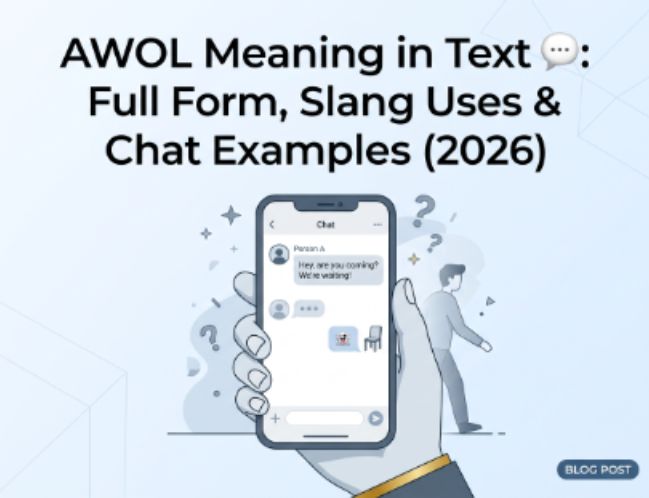

If someone texted you “he went AWOL yesterday” and you weren’t sure what it meant, you’re not alone. This guide breaks down the AWOL meaning in plain English, where the word came from, and how people actually use it in texts, group chats, and social media today.
Quick Answer
AWOL stands for “Absent Without (Official) Leave.” It started as a military term for a soldier who left their post without permission. In texting and everyday slang, the AWOL meaning has softened. It now simply describes someone who disappeared, stopped replying, or went quiet without telling anyone why.
What Does AWOL Mean?
At its core, the AWOL meaning is simple: someone is missing or unreachable when they’re expected to be present. The full form is “Absent Without Official Leave,” though many people shorten it to “Absent Without Leave.”
- Military sense: A service member who leaves duty without authorization.
- Everyday sense: A friend, coworker, or group member who vanishes from a conversation, event, or responsibility.
Both meanings share the same idea: someone is gone, and nobody gave them permission to be.
AWOL in the Military: The Original Meaning
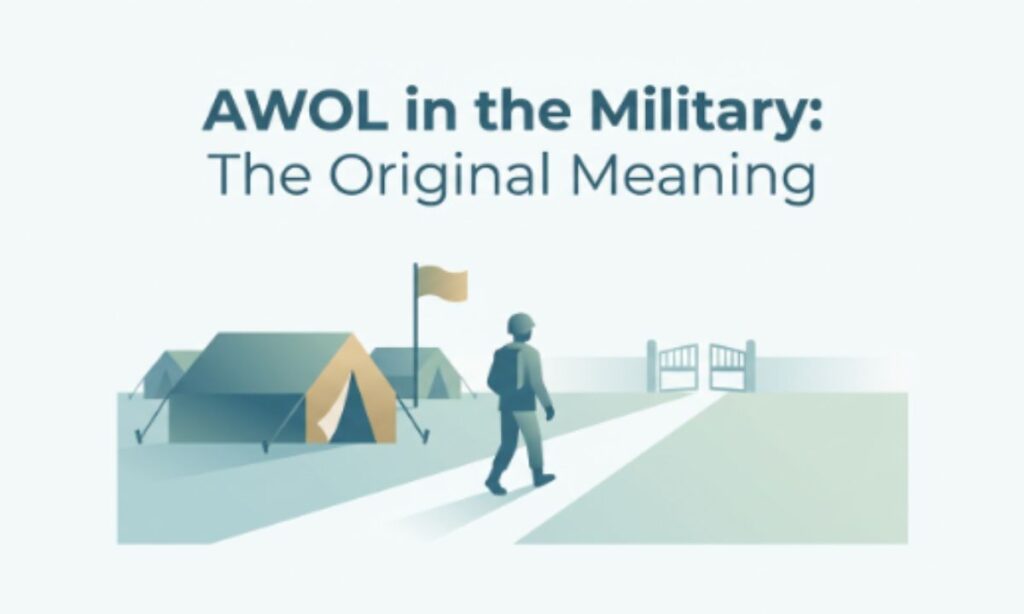
Before it became internet slang, AWOL meaning was strictly official. In the U.S. armed forces, going AWOL means leaving your assigned post, unit, or duty station without a superior’s permission. It’s a real offense under military law and can lead to disciplinary action, loss of pay, or worse, depending on how long the absence lasts.
Unlike a scheduled leave or approved time off, AWOL status is unauthorized from the moment someone doesn’t show up. It doesn’t require any proof of intent to stay away permanently, just an unapproved absence.
AWOL vs. Desertion — Not the Same Thing
People often mix these two up, but they’re not equal.
| Term | Meaning | Intent to Return? |
|---|---|---|
| AWOL | Unauthorized, usually short-term absence | Yes, expected to return |
| Desertion | Leaving with no intention of returning | No, permanent abandonment |
AWOL is treated as a temporary lapse. Desertion is far more serious because it implies the person never planned to come back. A soldier who is AWOL for a few days is handled very differently than one charged with desertion.
Where Did AWOL Come From?
The AWOL meaning has a longer history than most people assume. Military records trace the phrase “absent without leave” back to around 1767, used in British and American army documentation. It wasn’t until 1917, during World War I, that “AWOL” became a standardized acronym in U.S. Army paperwork.
By the 1960s, the term had escaped strictly military use and crept into civilian language. Soldiers returning to civilian life carried the phrase with them, and it slowly turned into casual slang for anyone who disappears unexpectedly, whether from work, school, or a friend group.
What Does AWOL Mean in Everyday Text and Slang?
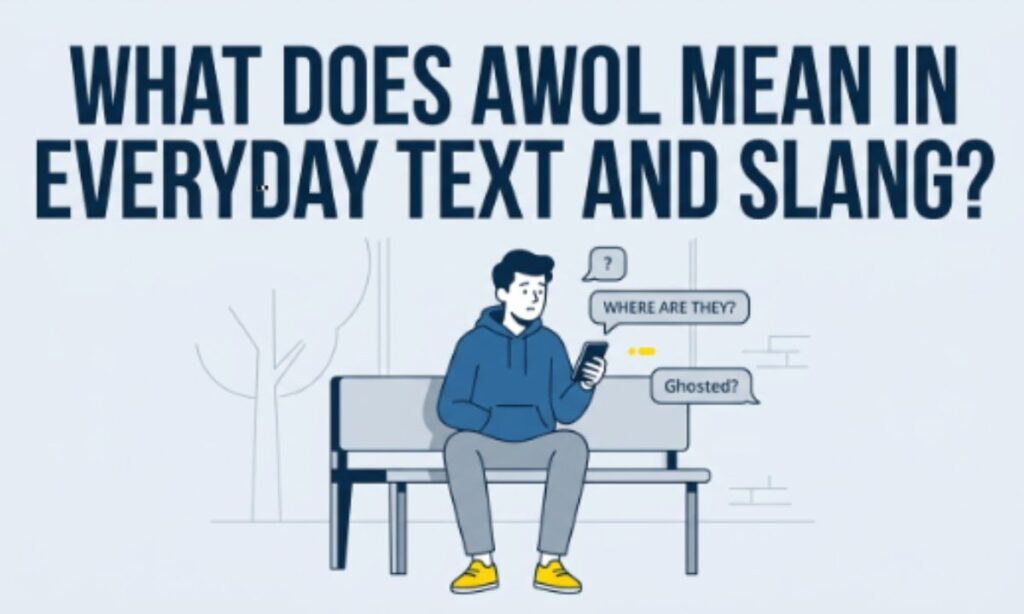
Outside the military, the AWOL meaning is much more relaxed. In texts and DMs, it usually just means someone went quiet or stopped responding.
Example: “He went AWOL from the group chat” simply means he stopped replying and nobody knows why.
You’ll see it used for:
- A friend who ditched plans without a heads-up
- A coworker who skipped a shift
- Someone who stopped texting back mid-conversation
- A teammate who disappeared during a group project
There’s rarely any legal or serious weight behind it. It’s a quick, punchy way to describe an unexplained disappearance.
AWOL Meaning by Context
“Going AWOL” in a Relationship
When someone says a partner “went AWOL,” they usually mean the person became distant, stopped texting back, or pulled away emotionally without explanation. It’s often used half-jokingly, but it can also signal real frustration about being ignored.
Does “AWOL” Mean Acting Crazy or Erratic?
No. This is a common mix-up. The AWOL meaning has nothing to do with acting wild, erratic, or unstable. It only refers to being absent or missing. If someone is behaving strangely, that’s a completely different situation, not what AWOL describes.
AWOL vs. MIA: What’s the Difference?
These two acronyms get confused constantly, but they’re not interchangeable.
| Term | Full Form | Meaning | Severity |
|---|---|---|---|
| AWOL | Absent Without (Official) Leave | Unauthorized absence, whereabouts often known | Mild to moderate |
| MIA | Missing in Action | Person’s status or location unknown, typically during combat | Serious, often urgent |
In casual texting, both get used loosely to mean “disappeared,” but MIA carries a heavier, more worrying tone since it implies the person’s fate is genuinely unknown. AWOL usually just means someone is choosing not to respond.
How Context Changes the AWOL Meaning
The same four letters can feel playful or serious depending on where and how they’re used. A joking “you went AWOL 😂” between friends is lighthearted.
The same word from a boss or a worried parent carries a much more serious tone. Context, punctuation, and emoji all shape how the AWOL meaning lands in any given message.
AWOL Meaning on Different Platforms
Text Messages and WhatsApp
Usually casual: “where were you, you went full AWOL last night.”
Snapchat and Instagram
Often used in captions or comments to tease a friend who’s been inactive or missing from stories.
TikTok and Social Media Comments
Used broadly, sometimes about creators who stopped posting: “bro went AWOL for three months.”
Discord and Gaming Chats
Common when a teammate disconnects or stops responding mid-game, often shortened even further in fast typing.
Real Conversation Examples
Friends
A: “You didn’t answer all day.” B: “Sorry, went AWOL for a bit, phone died.”
Group Chat
A: “Where’s Sam? He’s been AWOL since Monday.” B: “Probably just busy with exams.”
Gaming
A: “You went AWOL mid-match, we lost that round.” B: “My wifi dropped, my bad.”
Is Calling Someone “AWOL” Rude or Offensive?
Generally, no. It’s mild slang, not an insult or swear word. That said, tone matters. Said playfully among friends, it’s harmless. Said sharply or repeatedly, it can come across as accusing or passive-aggressive, so it’s worth reading the room before using it.
How to Reply to “AWOL”
Friendly Replies
- “Yeah, I disappeared for a bit, my bad!”
- “Oops, went off the grid for a while.”
Funny Replies
- “Strategic disappearance, don’t worry about it.”
- “I was on a secret mission.”
Polite Replies
- “Sorry for going quiet, I got caught up with something.”
- “Apologies, I missed your message earlier.”
When to Use — and When to Avoid — AWOL
Use it when:
- Chatting casually with friends or in informal group chats
- Teasing someone lightly about being unresponsive
- Describing a short, harmless disappearance
Avoid it when:
- Writing professional emails or formal reports
- The absence involves something genuinely serious, like a missing person
- You’re unsure how the other person will take the tone
Common Mistakes About AWOL
- Thinking AWOL means the same as desertion (it doesn’t)
- Assuming AWOL always refers to the military (it rarely does in texting)
- Confusing AWOL with acting erratic or “crazy” (unrelated meanings)
- Using AWOL interchangeably with MIA, even though MIA is more serious
AWOL vs. Similar Terms
| Term | Meaning |
|---|---|
| AWOL | Absent without permission or notice |
| Ghosted | Someone cuts off contact suddenly, often in dating |
| No-show | Someone fails to appear for a planned event |
| MIA | Missing, status or location unknown |
How to Pronounce AWOL
AWOL is pronounced as one word, not spelled out letter by letter. It sounds like “AY-wall” (rhymes loosely with “say wall”), similar to how acronyms like NASA are read as words rather than individual letters.
Frequently Asked Questions
What does AWOL mean in text?
In texting, AWOL meaning is simply “disappeared without explanation,” usually someone who stopped replying or showing up.
What does AWOL stand for?
AWOL stands for “Absent Without (Official) Leave.”
What does AWOL mean in the military?
It means a service member left their post or duty without official permission.
What’s the difference between AWOL and MIA?
AWOL means an unauthorized absence; MIA means the person’s location or fate is unknown, usually during combat.
Is AWOL the same as desertion?
No. AWOL implies an intent to return, while desertion means abandoning duty permanently.
Is AWOL rude to say?
Not usually. It’s mild slang, though tone can make it feel accusing if said harshly.
How should you reply to AWOL?
A light, honest response works best, such as explaining briefly why you went quiet.
Can AWOL have different meanings?
Yes. It shifts from a formal military term to casual slang depending on where and how it’s used.
Final Thoughts
The AWOL meaning has traveled a long way, from 18th-century military paperwork to a word people casually drop in group chats today.
Whether it’s a soldier missing from duty or a friend who went quiet for a few hours, the core idea stays the same: someone is absent, and nobody gave the green light.
Understanding the AWOL meaning in context makes it easier to use the term correctly, whether you’re texting a friend or writing something more formal.