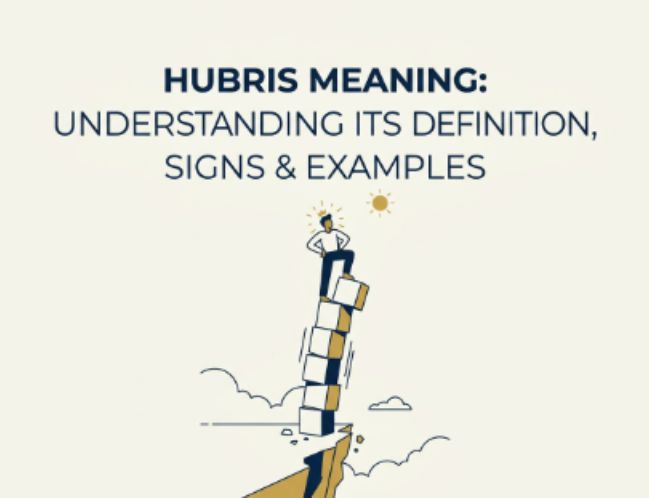

Quick Answer: The hubris meaning centers on excessive pride, arrogance, or overconfidence, often severe enough to blind a person to their own limits.
The word traces back to the Greek hybris, originally a legal term for outrageous, shameful conduct. In literature, hubris is the flaw that drives a hero toward downfall; in everyday language, it describes dangerous overconfidence in anyone who has stopped listening to reason.
Key Takeaways
- The hubris meaning centers on excessive pride or self-confidence that blinds someone to their own limitations.
- The word comes from the Greek hybris, once a legal crime in ancient Athens, not just a personality trait.
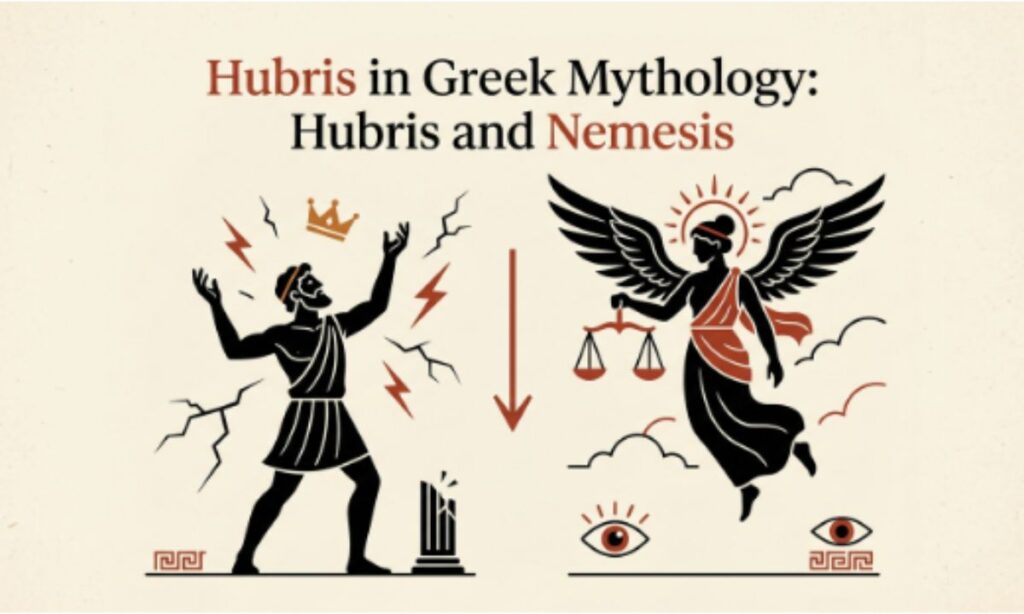
- In Greek mythology, hubris invites punishment from Nemesis, the goddess of retribution.
- Hubris is closely linked to hamartia (the tragic flaw), though the two terms aren’t identical.
- “Hubris syndrome” is a real, researched concept describing leaders who lose touch with reality after gaining power.
- Hubris differs from simple arrogance because it involves crossing a real boundary, not just feeling superior.
- Famous literary examples include Oedipus, Icarus, and Antigone.
What Does Hubris Mean?
At its simplest, the hubris meaning describes pride taken too far. It’s not ordinary confidence. It’s confidence that has curdled into recklessness, one that makes a person ignore warnings, dismiss advice, and believe they’re above consequence.
Dictionaries generally define hubris as excessive pride or self-confidence, especially the kind that defies the gods or challenges natural limits in Greek tragedy. In modern use, the hubris meaning has stretched beyond mythology to describe anyone, a CEO, a politician, a friend, whose overconfidence leads to a serious mistake.
Two ideas sit at the heart of hubris meaning:
- An inflated sense of one’s own power or judgment
- A blindness to risk, criticism, or reality that follows from it
Where Does the Word “Hubris” Come From?

Understanding hubris meaning starts with its Greek origin. The word comes from hybris (ὕβρις), roughly translated as “insolence,” “outrage,” or “wanton violence arising from pride.”
What surprises most people is that hubris wasn’t just a character flaw in ancient Greece. It was a legal crime in classical Athens, covering acts that publicly shamed or humiliated another person for the abuser’s own gratification. Only later did the word shift toward its modern, more psychological sense: excessive, dangerous pride.
Hubris in Greek Mythology: Hubris and Nemesis
Who Was Nemesis?
Nemesis was the Greek goddess of retribution, tasked with punishing excessive pride and restoring balance. In myth, hubris and Nemesis function as a pair: pride rises, and Nemesis answers it.
Famous Myths of Hubris (Icarus, Arachne, Narcissus)
- Icarus flew too close to the sun despite his father’s warning, and the wax on his wings melted.
- Arachne challenged the goddess Athena to a weaving contest and was transformed into a spider for her arrogance.
- Narcissus became so consumed by his own reflection that he wasted away, unable to look beyond himself.
Each story follows the same pattern central to hubris meaning: a mortal overreaches, and the consequences follow swiftly.
Hubris vs. Hamartia: What’s the Difference?
These two terms are often confused, but they aren’t the same thing.
| Hubris | Hamartia | |
|---|---|---|
| Definition | Excessive pride or overconfidence | A tragic flaw or fatal misjudgment |
| Scope | One specific type of flaw | A broader concept covering any fatal error |
| Origin | Greek hybris | Greek term used by Aristotle in his writings on tragedy |
| Relationship | Often the hamartia itself | Can include hubris, but isn’t limited to it |
In short, hamartia is the umbrella term for a hero’s fatal flaw. Hubris is frequently the specific flaw that fills that role.
Is Hubris the Same as Arrogance?
Not quite. Arrogance is feeling superior to others. Hubris meaning goes a step further: it involves crossing a real boundary, moral, natural, or social, because that inflated pride convinces someone the rules no longer apply to them.
How Context Changes the Meaning
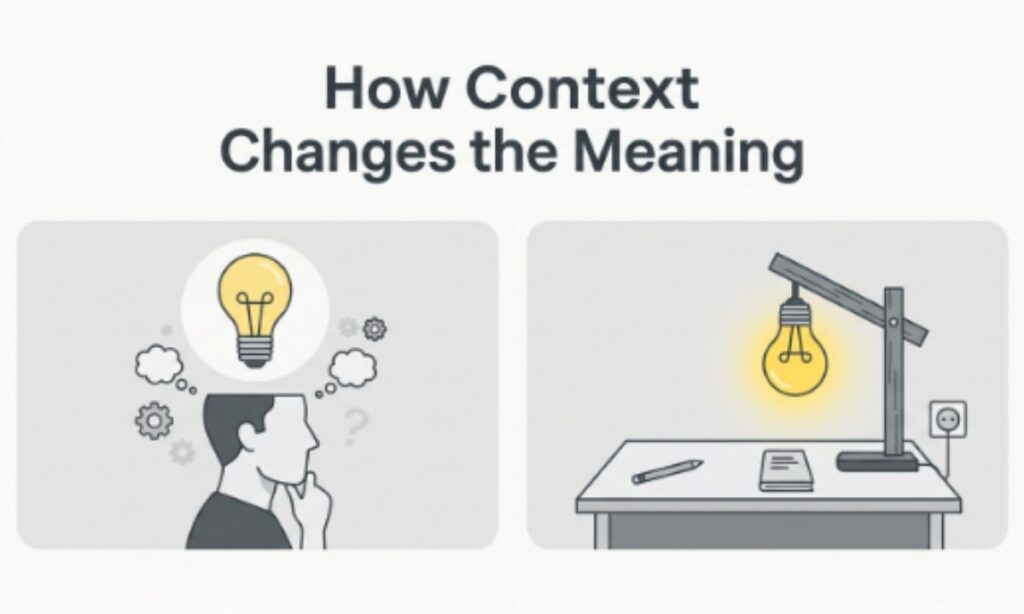
Everyday Conversation
Used casually to describe someone who’s overconfident to the point of being careless or dismissive.
Workplace Discussions
Often applied to leaders who ignore data, feedback, or warnings because they’re certain they already know best.
Literature or Storytelling
Refers specifically to the pride that sets a tragic hero on the path to downfall.
Political or Public Commentary
Describes leaders who lose touch with reality after holding power for an extended period.
Hubris in Literature: Famous Examples
Oedipus Rex (Sophocles)
Oedipus’s unwavering confidence in his own judgment drives him toward the very fate he tried to avoid.
Icarus (Greek Mythology)
His disregard for his father’s caution turns ambition into disaster, a defining image of hubris meaning in action.
Antigone (Sophocles)
Creon’s refusal to reconsider his decree, despite repeated warnings, leads to devastating personal loss.
“Hubris Syndrome”: A Real Psychological and Political Concept
Hubris meaning isn’t confined to mythology and literature. In 2009, physician and former UK Foreign Secretary Lord David Owen proposed “hubris syndrome,” a pattern seen in leaders who gain excessive, long-held power.
Its features include contempt for advice, an inflated sense of personal destiny, and a weakening grip on practical detail. Historical examples cited in this research include Napoleon’s disastrous invasion of Russia, driven by overconfidence that ignored the risks of scale and season.
The concept has since been studied in peer-reviewed psychiatric literature as a possible acquired personality pattern tied specifically to power.
Real Conversation Examples
Friends
“That’s pure hubris, thinking you can skip training and still win.”
Workplace
“His hubris meant he never asked the team for feedback before launch.”
Social Commentary
“Critics called the decision a textbook case of hubris.”
Is Hubris Rude or Insulting?
Calling someone hubristic is a pointed criticism. It’s rarely neutral, since it implies not just confidence, but a dangerous refusal to accept limits.
Is Hubris Always Negative?
Almost always, yes. While confidence itself is healthy, the hubris meaning specifically points to excess, pride that has tipped into recklessness or blindness.
How to Use Hubris Correctly
Appropriate Uses
- Describing a leader who ignores clear warning signs
- Analyzing a tragic hero’s downfall in literature
- Criticizing decisions made from overconfidence rather than evidence
When to Avoid It
- For simple confidence or healthy self-belief
- For minor mistakes unrelated to pride or overreach
How to Reply When Someone Calls Out Your Hubris

If They’re Criticizing You
Acknowledge the point calmly and ask what specifically prompted the comment.
If They’re Joking
Respond lightly and use humor to defuse any tension.
If You Disagree
Explain your reasoning without dismissing their concern outright, since doing so risks proving their point.
When to Use and Avoid the Word Hubris
Use “hubris” when describing serious overconfidence that leads to real consequences. Avoid it for everyday mistakes, simple stubbornness, or ordinary self-assurance, since stretching the hubris meaning too far weakens its impact.
Common Mistakes About Hubris
- Treating hubris and arrogance as identical
- Assuming hubris only applies to mythology or ancient literature
- Using it for minor overconfidence rather than serious overreach
- Confusing hubris with the broader concept of hamartia
Hubris vs. Similar Terms
Hubris vs. Arrogance
Arrogance is an attitude; hubris is arrogance acted upon, often with real consequences.
Hubris vs. Pride
Pride can be healthy and earned; hubris is pride that has become excessive and blind.
Hubris vs. Narcissism
Narcissism is a broader personality pattern centered on self-focus, while hubris specifically involves overreach tied to power or achievement.
How to Pronounce “Hubris”
Hubris is pronounced HYOO-briss (two syllables, stress on the first).
Hubris Meaning by Language
Hubris Meaning in Hindi
Often translated as ahankar or atishay ghamand, meaning excessive pride.
Hubris Meaning in Urdu
Commonly rendered as ghuroor or takabbur, both implying arrogant pride.
Hubris Meaning in Bengali
Expressed as ohonkar, meaning excessive self-pride.
Hubris Meaning in Tamil
Translated close to iravu perumai or ahankaram, denoting arrogant pride.
Hubris Meaning in Telugu
Rendered as ahankaram, meaning excessive pride or ego.
Hubris Meaning in Malayalam
Expressed as ahankaram, similar in structure to Tamil and Telugu.
Hubris Meaning in Marathi
Commonly translated as gaurav combined with ahankar, meaning excessive pride.
Hubris Meaning in Farsi
Closely tied to ghorur, referring to arrogant, excessive pride.
Hubris Meaning in German
Translated directly as Hybris, borrowed straight from the Greek root.
Hubris Meaning in Chinese
Commonly rendered as àomàn (傲慢), meaning arrogance or excessive pride.
Frequently Asked Questions
What does it mean if someone has hubris?
It means they show excessive pride or overconfidence that blinds them to real risks or limits.
Is hubris the same as arrogance?
No. Arrogance is an attitude, while hubris involves acting on that pride in a way that crosses real boundaries.
What is an example of hubris?
Icarus flying too close to the sun despite clear warnings is a classic example of hubris.
What is a synonym for hubris?
Common synonyms include arrogance, conceit, and overconfidence, though none captures the term exactly.
What is “hubris syndrome”?
It’s a proposed psychological pattern seen in leaders who develop exaggerated pride and lose touch with reality after holding power.
What’s the difference between hubris and hamartia?
Hamartia is the broader “tragic flaw” concept; hubris is one specific, common form that flaw can take.
Can hubris have different meanings depending on context?
Yes. It shifts slightly across everyday speech, workplace criticism, literature, and political commentary, though the core idea of dangerous overconfidence stays constant.
Conclusion
The hubris meaning has traveled a long way from its origins as a legal crime in ancient Athens. It now describes one of humanity’s most persistent patterns: confidence that grows unchecked until it invites its own downfall.
Whether you’re reading Sophocles, studying leadership failures, or simply calling out a friend’s overreach, understanding hubris meaning gives you a genuinely insightful way to recognize pride before it turns dangerous.