
Say “habibi” to a close friend, a parent, or a partner, and the habibi meaning shifts its shape a little each time. The habibi meaning is warm at its core, but genuinely flexible in practice, stretching across friendship, family, and romance without ever losing its affectionate weight.
This guide breaks down where habibi comes from, who it’s used with, and how to read the tone behind it.
Quick Answer
“Habibi” is an Arabic term of endearment meaning “my love,” “my dear,” or “darling,” used warmly among friends, family, and romantic partners.
The habibi meaning is a genuine expression of affection, not slang invented online, and it shifts naturally depending on who’s using it and their relationship with the listener.
Key Takeaways
- Core meaning: “My love,” “my dear,” or “darling,” used to address a man or boy.
- Feminine form: “Habibti” is the version used when addressing a woman or girl.
- Not just romantic: Family members and friends use it affectionately too, not only couples.
- Not religiously exclusive: Habibi is an Arabic word used across faiths and cultures, not limited to Islam.
- Context decides tone: Whether it reads as romantic, friendly, or playful depends entirely on the relationship and situation.
One Word, Many Warm Meanings
What makes the habibi meaning genuinely interesting is how naturally it moves between relationships. The same word that a mother uses with her child can also pass between two close male friends, or between romantic partners, without ever feeling out of place.
Very few English words carry that same range while staying just as warm in every version.
What Does Habibi Mean?
At its core, the habibi meaning translates directly to “my beloved,” “my love,” or “my dear.” It’s built from the Arabic root for love and affection, making it fundamentally a term of endearment rather than a neutral label.
Linguistic Roots: Where Does Habibi Come From?
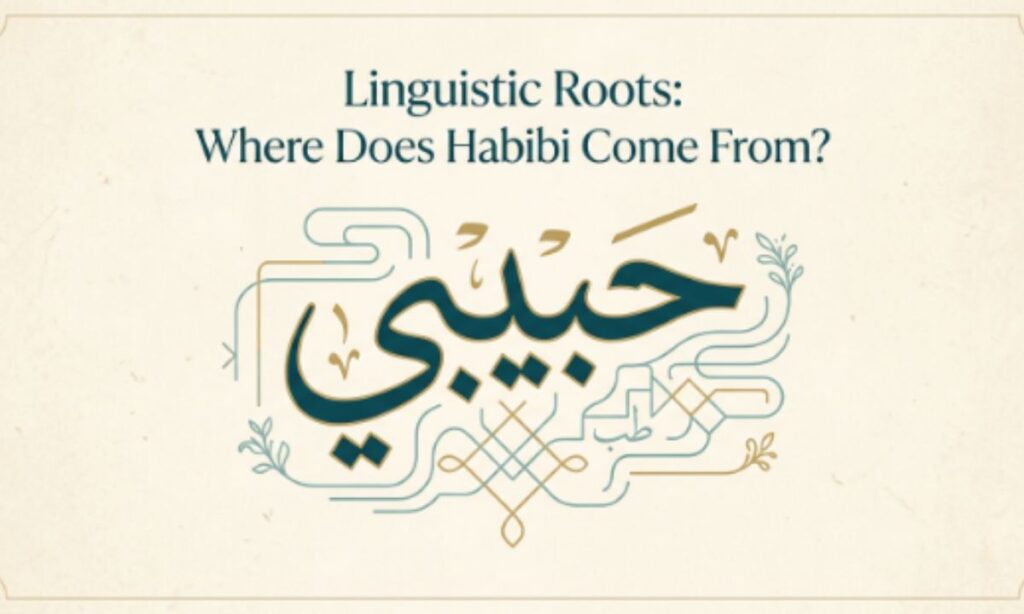
The habibi meaning comes from the Arabic word “habib,” meaning “beloved” or “darling,” itself rooted in the verb “habba,” meaning to love or to be fond of. The masculine form of the habibi meaning translates roughly to “my beloved,” while its feminine counterpart carries the same core meaning for women.
Habibi vs Habibti: What’s the Difference?
The two words share the same emotional core defining the habibi meaning but differ based on gender.
| Term | Used For | Core Meaning |
|---|---|---|
| Habibi | A man or boy | My beloved, my love, my dear |
| Habibti | A woman or girl | My beloved, my love, my dear |
The distinction depends on the gender of the person being addressed, not the speaker, so a woman can call a man “habibi,” and a man can call a woman “habibti.”
Is Habibi a Religious or Muslim-Specific Term?
No. Despite common assumptions, the habibi meaning isn’t tied to any specific religion at all. It’s simply an Arabic word, used across the Arab world by people of different faiths and backgrounds, including Muslim, Christian, and other communities. Its use is cultural and linguistic rather than religious.
Who Can You Call Habibi?
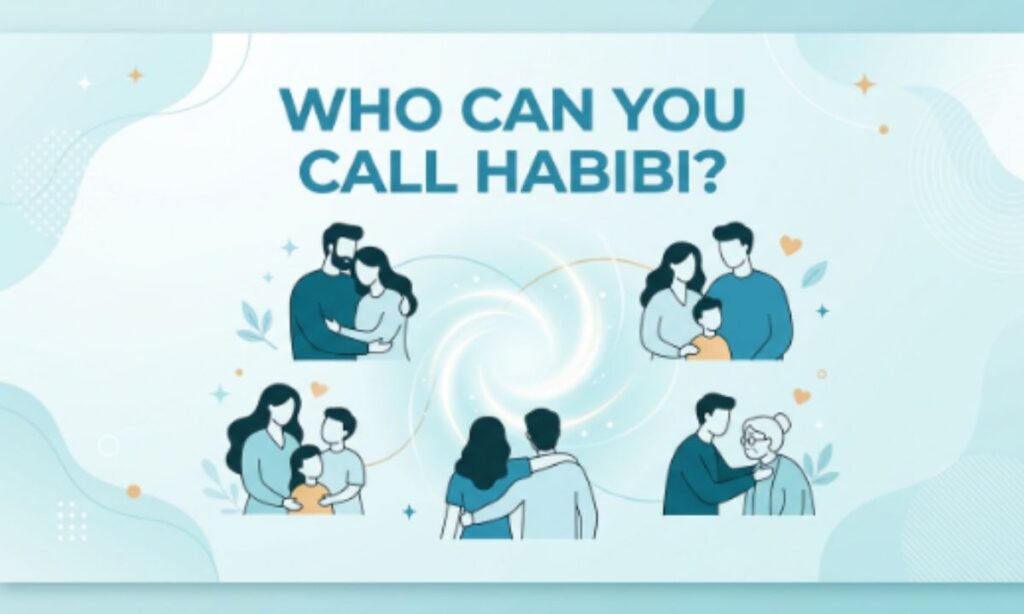
Between Friends (Platonic)
Male friends commonly use habibi with each other in a warm, entirely non-romantic way, similar to saying “buddy,” “bro,” or “my friend.”
Romantic Partners
Romantically, habibi carries real weight, often used between spouses or partners to express genuine love and closeness.
Parent to Child
Parents frequently use habibi with their children, carrying the same tender, affectionate meaning found in phrases like “my dear” or “sweetheart” in English.
Does Habibi Mean “Friend”?
Not exactly, though the habibi meaning can function that way in casual, platonic contexts. The habibi meaning is rooted in affection rather than a neutral word for “friend,” but between close friends, it often lands with a similar, casual warmth.
What Does “Ya Habibi” Mean?
Adding “ya” before habibi builds directly on the habibi meaning through a common vocative construction in Arabic, roughly translating to “oh, my dear” or simply emphasizing the address. “Ya habibi” can mean anything from “come on, my friend” to “hurry up, dear,” depending entirely on tone and context.
Is It Okay for a Girl to Call a Guy Habibi (and Vice Versa)?
Generally, yes, though context and familiarity shape how the habibi meaning lands. Between close friends or partners, it’s completely natural. Women are often advised to use it a bit more carefully with men they aren’t close with, since it can occasionally be misread as flirtatious depending on the relationship.
Is Habibi Flirty or Just Affectionate?
It can be either, and that’s exactly why context matters so much when reading the habibi meaning. Between romantic partners, the habibi meaning leans clearly affectionate and loving. Between friends or family, it’s warm but entirely platonic. The same word simply adjusts to the relationship it’s used within.
Real-Life Conversation Examples
Between Friends
“Habibi, you didn’t tell me you were coming today!”
Romantic Context
“I missed you so much, habibi.”
Casual Greeting
“Yalla habibi, we’re going to be late.”
Habibi in Texting and on Social Media
On WhatsApp, the habibi meaning shows up casually and often, especially in messages between close friends, family, or partners, matching the warmth of a real conversation.
TikTok
On TikTok, habibi frequently shows up in captions, comments, and audio trends, sometimes used affectionately and sometimes playfully as a lighthearted greeting.
On Instagram, habibi often appears in comments under photos of loved ones, friends, or partners, expressing genuine warmth in a quick, casual way.
What Is the Plural of Habibi?
The plural form is “habayibi,” meaning “my beloveds” or “my dears.” It can be used to address a group of people someone cares about, regardless of gender.
When Might Habibi Feel Inappropriate or Out of Place?
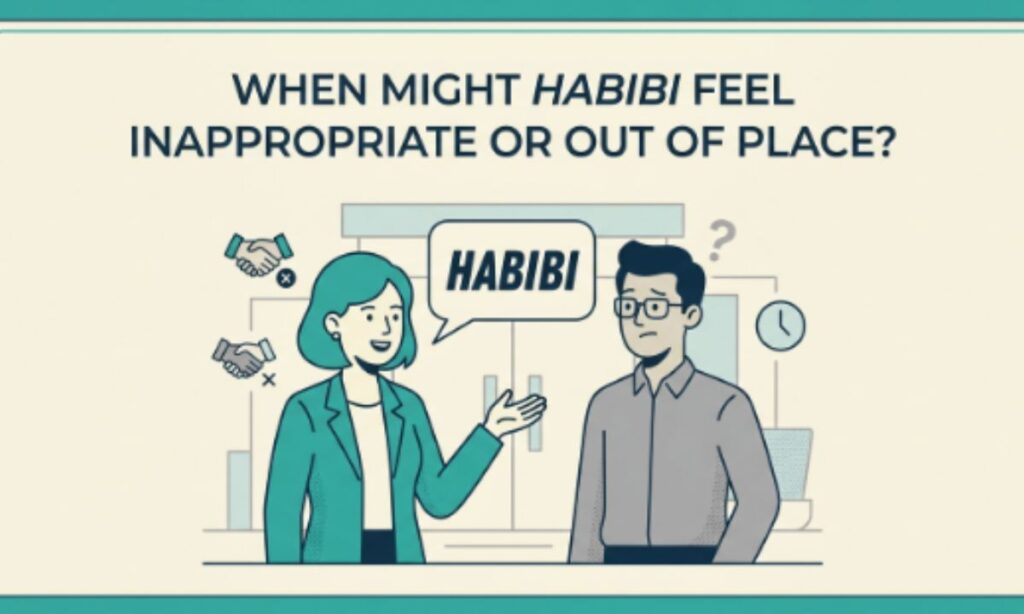
Despite its warmth, the habibi meaning isn’t meant for every relationship. Using it with a boss, a doctor, an elderly stranger, or someone in a formal or professional setting can come across as overly familiar or inappropriate, since the word carries real emotional weight rather than functioning as a neutral greeting.
How to Respond When Someone Calls You Habibi
A simple, warm reply usually fits best, matching the habibi meaning by responding with “habibi” or “habibti” back, depending on context, or simply continuing the conversation naturally, since the word rarely requires a specific formal response.
Frequently Asked Questions
What does habibi mean in slang?
Habibi means “my love,” “my dear,” or “darling,” an Arabic term of endearment used affectionately across different relationships.
Is habibi only for men?
No, habibi is used to address a man or boy, while “habibti” is the equivalent used for a woman or girl.
What is the difference between habibi and habibti?
The difference is purely gender-based, referring to who’s being addressed rather than who’s speaking, with both carrying the same warm, affectionate meaning.
What does “ya habibi” mean?
“Ya habibi” adds emphasis to the address, generally translating to “oh, my dear,” and can be used in both affectionate and casual, everyday contexts.
Is it okay to say habibi to a girl or guy?
Generally yes, especially among friends, family, or partners, though it’s worth using a bit more carefully with people you aren’t close to.
Is habibi a romantic word?
It can be, though it’s just as commonly used platonically between friends and family members, with tone and relationship determining the meaning.
Is it offensive to say habibi?
No, it isn’t offensive, though it can feel out of place in formal or professional settings given how affectionate the word is.
What is the plural of habibi?
The plural form is “habayibi,” meaning “my beloveds” or “my dears.”
Conclusion
The habibi meaning stays warm no matter where it lands, whether that’s shared between old friends, a parent and child, or two people in love. Its flexibility is really the point: one word, rooted in genuine affection, adjusting naturally to whichever relationship it’s spoken within. Understanding that range makes it much easier to read the warmth behind it correctly, every single time.