
Very few words carry as much quiet weight as “humility.” The humility meaning sounds simple on the surface, yet it touches on religion, psychology, leadership, and everyday relationships all at once.
This guide breaks down the full humility meaning, where it shows up, and why it’s so often described as a strength rather than a weakness.
Quick Answer
Humility means having a modest view of your own importance, recognizing your strengths without needing to boast about them, and staying open to being wrong.
The humility meaning is widely considered a virtue across religious, philosophical, and everyday contexts, often seen as a sign of real strength rather than weakness.
The Strength in Stepping Back: What Humility Really Means
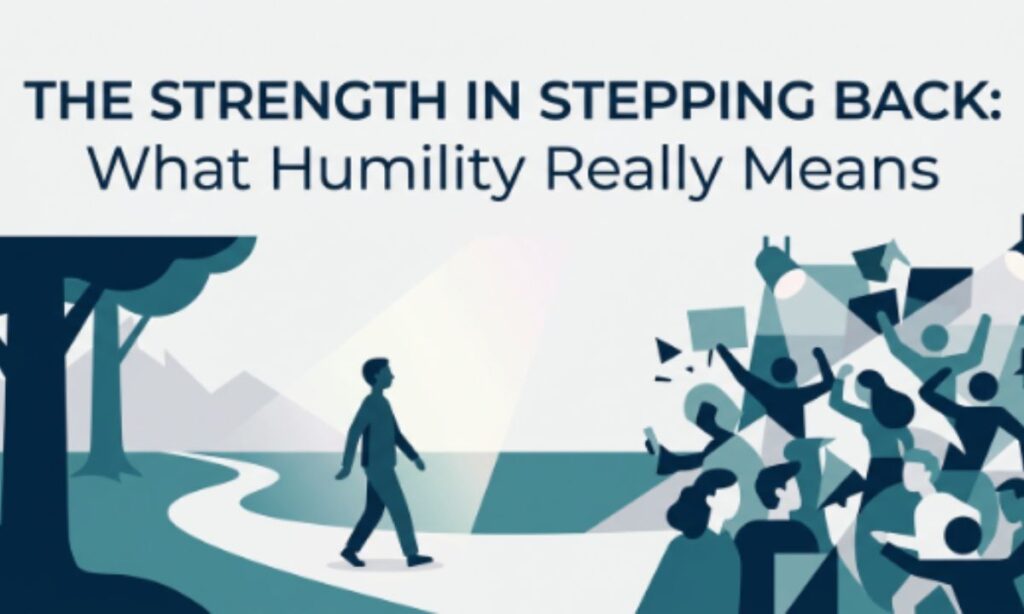
There’s a quiet paradox built into the humility meaning: the people who possess it rarely feel the need to announce it. Real humility isn’t about shrinking yourself or pretending you have no strengths.
It’s about staying grounded enough to keep learning, keep listening, and keep growing, even when you’ve already achieved something worth being proud of.
What Does Humility Mean?
At its core, the humility meaning describes a modest, realistic view of your own importance. A humble person recognizes their achievements and abilities without exaggerating them, and stays genuinely open to feedback, correction, and other people’s perspectives, which is really the heart of the humility meaning in practice.
Is Humility the Same as Modesty?
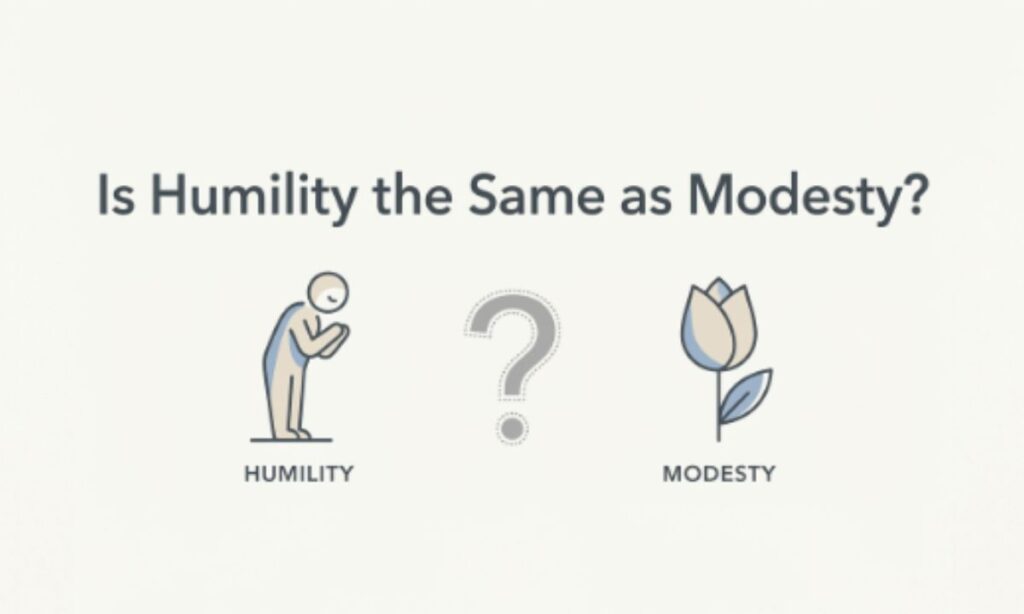
Not quite, though the two overlap closely. Modesty tends to focus on how someone presents themselves, downplaying achievements outwardly.
The humility meaning goes a layer deeper, describing an internal mindset rather than just outward behavior, which is exactly why the two words aren’t perfect synonyms.
Someone can appear modest without truly holding humility inside, and someone with genuine humility doesn’t always need to look modest to have it.
Is Humility the Opposite of Confidence?
No, and this is one of the most common misunderstandings around the word. The humility meaning isn’t about doubting your own abilities; it’s about not letting those abilities inflate your sense of importance over others. Confidence and humility can, and often do, exist in the same person at once.
Can Humility and Confidence Exist Together?
Yes, in fact, some of the strongest examples of the humility meaning in action come from genuinely confident people who simply don’t need external validation to feel secure.
A confident, humble person can acknowledge their skill in a specific area while still staying open to criticism, new ideas, or being proven wrong, which shows just how naturally the humility meaning pairs with self-assurance.
What Is “False Humility”?
False humility describes performative modesty, downplaying achievements outwardly while still seeking praise or attention underneath. It’s a surface-level imitation of the real humility meaning, often recognizable because it seems to invite compliments rather than genuinely deflect them.
What Is “Intellectual Humility”?
Intellectual humility is a specific, well-studied concept describing openness to being wrong. It reflects an honest awareness that your own knowledge and beliefs are limited, and a genuine willingness to update your views when presented with better evidence or reasoning. This branch of the humility meaning plays a major role in critical thinking and healthy debate.
What Is “Cultural Humility”?
Cultural humility is a widely used concept in healthcare, education, and social work, describing an ongoing, self-reflective process of understanding and respecting perspectives different from your own.
Rather than treating cultural understanding as something you achieve once and finish, this version of the humility meaning frames it as continuous learning and self-awareness.
Humility in Religious and Spiritual Traditions

Humility in Islam
In Islamic tradition, humility is often described through the Arabic term “tawadu,” rooted in a word meaning “to lower” or “to settle.” Rather than meaning to think little of yourself, tawadu describes seeing yourself accurately, recognizing that your abilities and blessings ultimately come from a source beyond yourself.
Far from being viewed as weakness, this form of the humility meaning is treated as a mark of real spiritual and personal strength.
Humility in the Bible
In Christian tradition, humility is frequently framed as a virtue closely tied to service, gentleness, and putting others before oneself. Biblical teachings often present humility as a quality that leads to genuine honor, contrasting sharply with pride, which is portrayed as leading toward downfall.
How Context Changes the Meaning of Humility
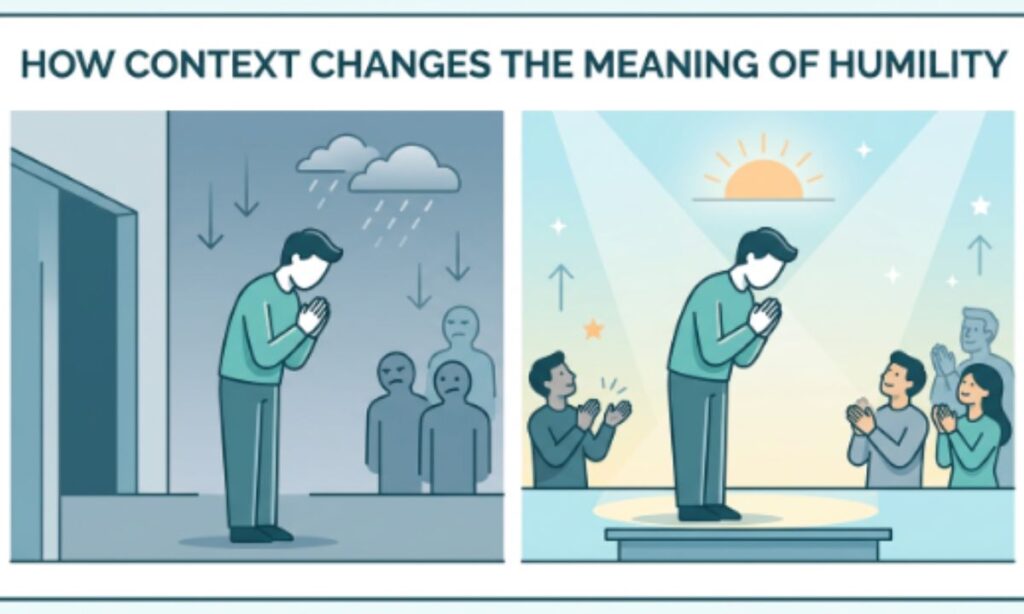
The humility meaning shifts slightly depending on where it’s applied, though the underlying idea stays constant. In personal relationships, it often centers on listening and acknowledging mistakes.
In leadership, it centers on staying open to feedback despite holding authority. In spiritual contexts, it often centers on recognizing a power or truth greater than oneself.
Real Conversation Examples
With Friends
“I really admire how she handled that win, no bragging, just genuine humility.”
At Work
“He led the whole project but still credited the entire team, real humility.”
With Family
“Dad always says staying humble is what keeps you learning, no matter how much you know.”
Is Humility a Positive Quality?
Yes, almost universally so. Across philosophy, religion, psychology, and everyday life, the humility meaning is treated as a genuinely positive trait, closely associated with better relationships, stronger leadership, and greater openness to growth.
The humility meaning also tends to earn respect precisely because it’s rare; people notice when someone with real accomplishments still chooses to stay grounded.
Is Humility the Same as Low Self-Esteem?
No, and this distinction matters. Low self-esteem involves an unhealthy, often inaccurate lack of confidence in oneself. The humility meaning, by contrast, doesn’t require thinking poorly of yourself; it simply requires not placing your own importance above others.
How to Use “Humility” in a Sentence
Humility works naturally in sentences describing modest, grounded behavior, especially following an achievement, and it’s one of the clearest ways to demonstrate the humility meaning in everyday writing. For example: “She accepted the award with humility, thanking her whole team instead of taking sole credit.”
Common Mistakes About Humility
- Confusing humility with low self-worth or self-doubt
- Assuming humble people can’t also be confident or ambitious
- Mistaking false, performative modesty for genuine humility
- Treating humility as passive, when it often requires real self-awareness and effort
Similar Terms Compared: Humility vs Modesty vs Meekness
These three words often get grouped together, but each carries its own distinct emphasis.
| Term | Core Focus | Key Difference |
|---|---|---|
| Humility | An internal, modest view of one’s own importance | Focuses on mindset over outward behavior |
| Modesty | How achievements or abilities are presented outwardly | Focuses more on presentation than inner belief |
| Meekness | A gentle, non-assertive temperament | Focuses on tone and demeanor rather than self-perception |
Humility-Related Concepts at a Glance
| Concept | What It Describes |
|---|---|
| False Humility | Performative modesty that still seeks praise underneath |
| Intellectual Humility | Openness to being wrong and updating one’s beliefs |
| Cultural Humility | Ongoing self-reflection about differing cultural perspectives |
Frequently Asked Questions
What does humility mean?
Humility means having a modest, realistic view of your own importance, without needing to boast about your strengths or achievements.
Is humility the same as low self-esteem?
No, humility doesn’t require thinking poorly of yourself; it simply means not placing your importance above others.
Is humility a positive quality?
Yes, humility is widely regarded as a positive trait across religious, philosophical, and everyday contexts.
What is “false humility”?
False humility is performative modesty that outwardly downplays achievements while still seeking praise or attention.
What is “intellectual humility”?
Intellectual humility is the willingness to acknowledge the limits of your own knowledge and stay open to being wrong.
How should you use humility in a sentence?
Use it to describe modest, grounded behavior, especially after an achievement, such as “he handled the win with real humility.”
Can humility and confidence exist together?
Yes, confidence and humility often coexist, since humility is about staying grounded, not about doubting your own abilities.
Conclusion
The humility meaning has stayed remarkably consistent across centuries, cultures, and belief systems: a modest, grounded view of your own importance that leaves room for growth, correction, and genuine respect for others.
Whether it shows up in a religious teaching, a leadership style, or a quiet moment after a big win, humility keeps proving itself as strength, not weakness, every single time.