
Quick Answer: The IDTS meaning in text is “I don’t think so,” used to express doubt, disagreement, or mild skepticism about something someone just said. It’s a quick, casual way to push back without sounding harsh, common in texting, social media, and group chats.
Key Takeaways
- The IDTS meaning stands for “I don’t think so,” expressing doubt or disagreement rather than outright refusal.
- It emerged alongside early texting slang like LOL and BRB, with documented usage dating back to the late 2010s.
- IDTS, IDK, and IDC each express a different feeling: doubt, uncertainty, and apathy.
- Tone and punctuation change how IDTS lands, from playful to dismissive.
- IDTS should stay in casual conversations and be avoided in professional or formal writing.
IDTS Meaning in Chat
In everyday chat, the IDTS meaning centers on gentle disagreement. It’s not a hard “no.” It signals doubt, suggesting the person isn’t convinced something is true or likely to happen.
Simple Breakdown
I-D-T-S breaks down directly to “I Don’t Think So,” a compact way to express skepticism without writing out the full phrase.
Example Sentences
- “Is it gonna rain today?” “IDTS, sky looks clear.”
- “You think they’ll show up?” “IDTS honestly.”
- “Can we finish this by Friday?” “IDTS, we’re too behind.”
Where Did IDTS Come From?
The IDTS meaning grew out of the same wave of shorthand texting slang that gave us LOL, BRB, and IDK, born from a need to type fast on early mobile keyboards.
While exact origins are hard to pin down, documented usage on platforms like Twitter traces back to around 2017 and 2018, when the abbreviation became a common, casual way to voice doubt online.
IDTS vs. IDK vs. IDC: What’s the Difference?
These three acronyms get mixed up constantly, but each carries a distinct emotional tone.
| Acronym | Full Form | Core Meaning |
|---|---|---|
| IDTS | I don’t think so | Doubt or disagreement |
| IDK | I don’t know | Uncertainty or lack of information |
| IDC | I don’t care | Indifference or apathy |
IDK says “I’m not sure.” IDC says “It doesn’t matter to me.” IDTS says “I doubt that’s true,” making it the most opinionated of the three.
Real-Life Conversations
WhatsApp Chat
“Is the store still open?” “IDTS, it’s already 9pm.”
Instagram DM
“You think she’ll like this gift?” “IDTS, not really her style.”
TikTok Comments
“This trend is coming back.” “IDTS lol, it never really left.”
Text Message
“Can you make it tonight?” “IDTS, running late at work.”
How Tone and Punctuation Change IDTS
Small details shift how IDTS reads. “IDTS lol” or “IDTS haha” softens the message, keeping it playful and light. “IDTS.” with a period, especially with no other context, can read as flat, final, or even dismissive. Adding a reason after IDTS almost always makes it feel more thoughtful and less abrupt.
Is IDTS Rude?
Not inherently. The IDTS meaning is generally a quick, low-conflict way to disagree. It only risks sounding rude when it’s sent bare, with no explanation, especially in a serious or emotionally charged conversation.
Usage in Different Contexts
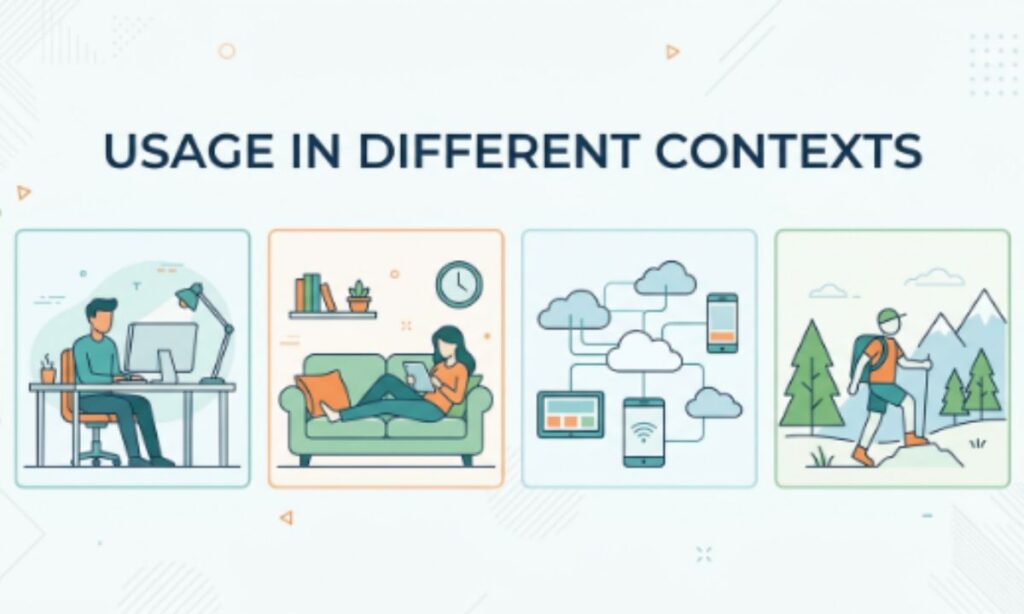
Social Media
Used casually in comments and replies to push back on opinions or predictions.
Friends & Relationships
Common in everyday back-and-forth chats, often paired with humor or emojis.
Work or Professional Settings
Rarely appropriate; formal disagreement calls for clearer, fuller phrasing.
Casual vs. Serious Tone
In light conversations, IDTS reads as breezy. In serious discussions, it can come across as too blunt without added context.
Common Misunderstandings
Thinking It Means “I Don’t Know”
IDTS expresses doubt, not uncertainty. That distinction belongs to IDK.
Assuming It’s Always Rude
Most of the time, IDTS is simply efficient, not disrespectful.
Using It in Sensitive Situations
Bare IDTS in an emotional conversation can feel dismissive, even if that wasn’t the intent.
IDTS Meaning by Platform
The IDTS meaning stays consistent no matter where it’s used, so there’s no real platform-to-platform variation.
On Snapchat
Used the same way as everywhere else, typically in quick replies to snaps or chats.
On Instagram
Appears frequently in comments and DMs, usually paired with a follow-up reason.
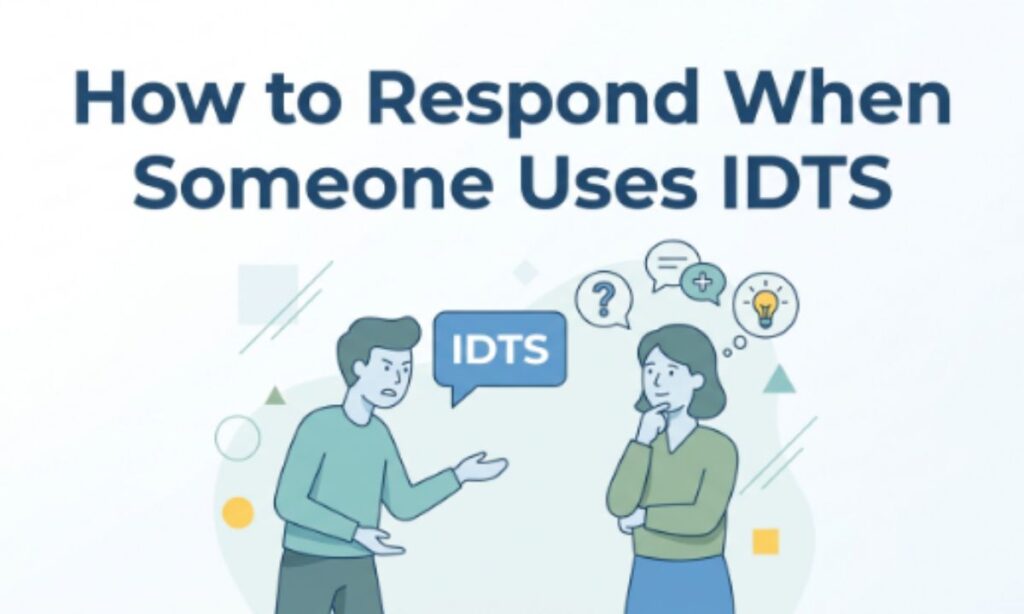
How to Respond When Someone Uses IDTS
Asking for Clarification
“IDTS, why not?” invites more detail without sounding confrontational.
Providing More Context
Following up with your own reasoning keeps the conversation moving productively.
Casual Follow-Up
A simple “fair enough” or “okay, why though?” keeps the tone relaxed.
Should You Use IDTS in Professional Settings?
No. In professional or formal writing, it’s better to write out “I don’t think so” in full, since abbreviations like IDTS read as too casual for workplace communication.
Frequently Asked Questions
What does IDTS mean in texting?
It stands for “I don’t think so,” used to express doubt or disagreement.
Is IDTS rude?
Not usually. It’s generally seen as a quick, casual way to disagree rather than a rude one.
Can I use IDTS in formal writing?
No. Formal writing should use the full phrase “I don’t think so” instead.
What’s the difference between IDTS and IDK?
IDTS expresses doubt about something specific, while IDK expresses general uncertainty or lack of knowledge.
How do I make IDTS sound polite?
Add a brief reason or a softer word like “lol” or “haha” to keep the tone light.
Is IDTS commonly used today?
Yes, it remains a common, actively used abbreviation across texting and social media.
What is IDTS’s full form?
Its full form is “I don’t think so.”
Conclusion
The IDTS meaning captures something texting does especially well: turning a full sentence of doubt into four quick letters. Simple, casual, and genuinely useful, it lets people express disagreement without slowing down the conversation. Once you understand IDTS meaning and how tone shapes it, you can use it confidently and read it accurately in any chat.