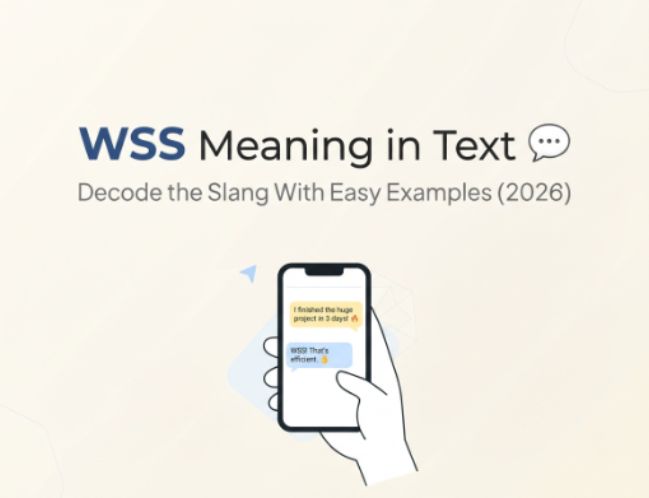

Quick Answer: The WSS meaning in text is most reliably documented as “Why So Sad?” a way of checking in with someone who seems down or quieter than usual. It also has a completely unrelated medical meaning and shows up frequently as a tag within Dream SMP (DSMP) fan communities.
Clear Meaning of WSS in Text
The most established WSS meaning is “Why So Sad?” used to gently ask someone what’s wrong when they seem down, quiet, or off their usual mood.
Simple Definition
WSS = Why So Sad, a caring, low-pressure way of checking in on someone.
Is WSS the Same as “SS”?
Not quite. “SS” is its own separate, more ambiguous abbreviation with several possible readings depending on context, while the WSS meaning specifically carries the added “why,” turning it into a direct question rather than a standalone reaction.
Does WSS Have Other Meanings?
Outside its use as “Why So Sad?”, WSS shows up in a couple of specific, unrelated contexts.
WSS in Medical Terms
In medicine, WSS refers to “Wiedemann-Steiner Syndrome,” a rare genetic disorder associated with distinctive facial features, intellectual disability, and excess body hair growth. This medical WSS meaning has no connection to the casual texting phrase.
WSS in DSMP (Dream SMP Fandom)
Within the Dream SMP fan community, a large Minecraft roleplay server and its associated fandom, WSS shows up frequently as a tag on fan videos and posts, sometimes paired with terms like “dni” (do not interact).
Its exact, single definition within the fandom isn’t clearly documented the way “Why So Sad?” is elsewhere, so it functions more as a familiar fandom marker than a fixed phrase with one confirmed meaning.
Why Do People Use WSS?
People reach for the WSS meaning because it offers a caring, non-pressuring way to check in on someone, shorter and gentler than typing out the full question.
Origin and History of WSS
Where Did WSS Come From?
Like many texting abbreviations, WSS developed as a shorthand for a common conversational question, compressing “why so sad?” into a quick, easy-to-type check-in.
Is WSS New?
No, slang dictionaries have documented the “Why So Sad?” reading for years, though its recent spread through fandom spaces and short-form video has kept it circulating among newer audiences.
Who’s Texting You “WSS”? What It Really Means
When someone sends “WSS,” they’ve usually noticed something seems off and are gently asking what’s going on, not making an accusation or demand.
WSS Meaning on Social Media Platforms
The WSS meaning shows up somewhat differently depending on the platform.
On Instagram, WSS occasionally appears in comments checking in on a caption or post that reads as down or reflective.
TikTok
On TikTok, WSS appears constantly, both as the “Why So Sad?” check-in and as a fandom tag, especially within Dream SMP related content.
Snapchat
On Snapchat, WSS is used more rarely, typically in a quick, caring check-in after a somber snap or story.
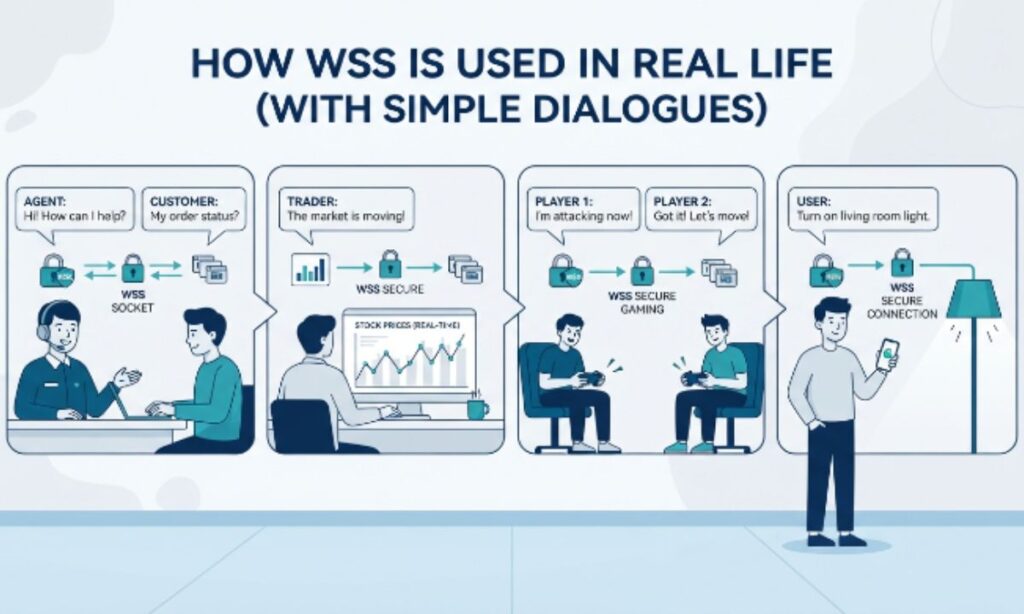
How WSS Is Used in Real Life (With Simple Dialogues)
Example 1: Talking About a Crush
“You’ve been quiet about him lately.” “Yeah… wss, right? I don’t even know what happened.”
Example 2: After an Argument
“You seem off today.” “Wss? I guess I’m still upset about earlier.”
Example 3: Group Chat
“Anyone know why she left early?” “Wss, she seemed fine earlier.”
When Should You Use WSS?
The WSS meaning fits best in casual, caring conversations between friends, when checking in gently feels more appropriate than asking directly.
Common Mistakes and Misconceptions
Using WSS in Formal Writing
The WSS meaning is far too casual for professional or formal communication.
Thinking It Always Means One Thing
Assuming WSS always means “Why So Sad?” misses its separate, unrelated uses in medicine and specific online fan communities.
Using It Without Context
Sending “WSS” with no context can confuse the recipient, since it works best as a direct response to something that already reads as somber or off.
WSS vs Similar Slang Terms
| Term | Meaning | Tone |
|---|---|---|
| WSS | Why So Sad? | Caring, gentle check-in |
| SMH | Shaking My Head | Disbelief, disappointment |
| SS | Varies by context | Ambiguous, context-dependent |
| WYD | What You Doing | Casual check-in |
Is WSS Appropriate for Kids?
The WSS meaning itself is harmless and caring, though its fandom-specific uses may reference content, like Dream SMP storylines, that parents may want to be aware of separately from the phrase itself.
How to Reply to WSS
A short, honest answer works well, like “just tired” or a brief explanation of what’s actually going on.
Frequently Asked Questions
What does WSS mean in text?
The most documented WSS meaning in text is “Why So Sad?” a gentle check-in when someone seems down.
What does WSS stand for?
WSS most reliably stands for “Why So Sad?” though it has separate, unrelated meanings in medicine and specific fan communities.
Is WSS rude?
No, the WSS meaning is caring and gentle, not rude or confrontational.
Can WSS have other meanings?
Yes, in medicine it refers to Wiedemann-Steiner Syndrome, and within Dream SMP fan spaces it functions more as a recurring tag than one fixed phrase.
Should I use WSS in professional emails?
No, the WSS meaning is casual slang, unsuitable for professional writing.
Is WSS still popular in 2026?
Yes, particularly within fandom spaces and casual texting, the WSS meaning remains in active use.
What does WSS mean in DSMP?
Within Dream SMP fan communities, WSS commonly appears as a recurring tag on fan content, though it doesn’t have one single, clearly documented definition specific to the fandom.
What does WSS mean medically?
In medicine, WSS stands for “Wiedemann-Steiner Syndrome,” a rare genetic disorder unrelated to the texting phrase.
Final Thoughts
At its core, the best-documented WSS meaning comes down to care: a gentle way of asking why someone seems sad. Its separate uses in medicine and online fandoms are worth knowing too, since assuming one fixed meaning everywhere can lead to real confusion. Reading the context remains the most reliable way to know which WSS you’re looking at.